
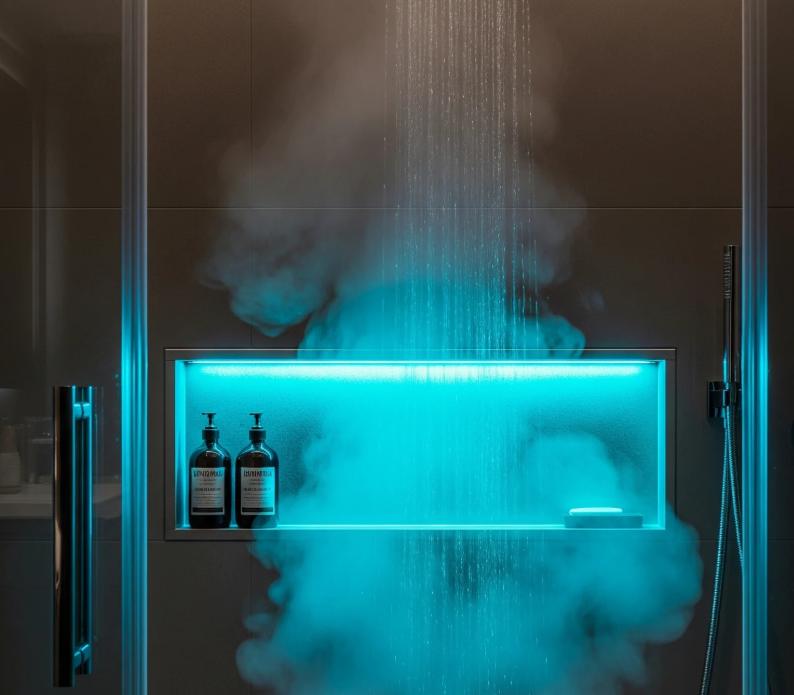
Bathroom design is increasingly focused on combining convenience with attractive details that make everyday routines easier. A shower niche can provide an organized place for shampoos, soaps, and other essentials while reducing clutter around the shower floor. A lighted shower niche adds another layer of functionality by bringing focused illumination to this storage area. It can also create a soft visual feature that complements wall tiles and other bathroom finishes. When planning one, homeowners should consider the niche size, location, waterproofing, lighting type, electrical requirements, tile layout, and overall bathroom style. Careful planning can create a useful feature that looks integrated rather than added as an afterthought.
Understanding Shower Niches
A shower niche is a recessed storage space built into a shower wall. Instead of using freestanding shelves or hanging organizers, the niche creates storage within the wall itself.
Its dimensions can be customized according to the available wall space and the items that need to be stored. Some designs use one large opening, while others divide the space into several sections.
Choosing the Right Location
The niche should be positioned where shower products can be reached comfortably. Placing it too low can make bending inconvenient, while placing it too high may make everyday items difficult to access.
The location should also be planned around plumbing, electrical components, structural framing, and the shower layout. These factors should be reviewed before construction begins.
Selecting the Niche Size
The ideal niche size depends on the number and type of products being stored. A household with several bottles may need a wider or taller design, while a minimalist bathroom may require only a compact compartment.
The depth should also be considered. A niche that is too shallow may not hold larger containers securely, while excessive depth can reduce useful wall space.
Planning the Lighting
Lighting is the defining feature of this type of niche. LED strip lighting, recessed fixtures, or other suitable waterproof-rated lighting systems can be incorporated depending on the design.
The light should provide enough illumination to highlight the storage area without producing uncomfortable glare. The position of the light source can influence how the shelves, bottles, and tile surfaces appear.
Considering Waterproofing
Because the niche is located inside a wet area, waterproofing is essential. The recessed opening, corners, joints, and surrounding wall system need appropriate moisture protection.
Water should not be allowed to collect inside the niche. Proper construction techniques and a slight slope on horizontal surfaces can help direct water toward the shower area.
Choosing Suitable Tiles
Tile selection can turn the niche into a decorative feature. The interior can use the same tile as the surrounding shower wall for a seamless appearance or introduce a complementary material for contrast.
Mosaic tiles can work well on smaller surfaces because their dimensions allow easier fitting around corners and slopes. Larger tiles can create a cleaner visual effect when the layout permits.
Using LED Lighting
LED technology can provide efficient illumination in a compact space. It is available in different color temperatures and formats, allowing homeowners to coordinate the niche with the bathroom’s overall lighting.
The lighting system must be appropriate for wet-area use. Product specifications should be checked carefully before installation to ensure suitability for the intended location.
Selecting the Light Color
The color of the light can influence the atmosphere of the shower. Warm illumination can create a softer and more relaxing appearance, while neutral illumination may provide a cleaner and brighter look.
The selected temperature should coordinate with the vanity, ceiling, and accent lighting so that the bathroom does not have noticeably conflicting light tones.
Creating Multiple Shelves
A niche can include several shelves to separate different products. Two or three compartments may make it easier to organize shampoo, conditioner, soap, skincare products, and other shower essentials.
Shelf spacing should be based on the actual height of the containers rather than simply dividing the niche into equal sections.
Considering Shelf Materials
The shelf surface needs to tolerate regular exposure to moisture. Tile is a common option, while stone or other suitable waterproof materials can also be considered.
Horizontal shelves should be designed to prevent standing water. Proper slopes and carefully finished edges can improve drainage and reduce water accumulation.
Coordinating With Bathroom Decor
A niche can blend into the bathroom or become an accent feature. Matching the niche tile with the surrounding walls creates a unified appearance, while contrasting colors or textures can draw attention to the recessed area.
The lighting can further emphasize the chosen finish, particularly when the niche is positioned within the main visual field of the shower.
Thinking About Shower Size
The size of the shower enclosure influences how much wall space is available for a niche. A compact shower may benefit from a narrow vertical niche, while a larger shower can accommodate a wider horizontal design.
The niche should not interfere with shower fixtures, doors, benches, or other built-in elements. Planning all components together helps avoid conflicts.
Planning Around Plumbing
Existing water lines can affect where a niche can safely be installed. Cutting into a wall without identifying pipes and other services can create significant problems.
The niche location should therefore be coordinated with plumbing and structural elements before the wall is opened. This is particularly important during renovations.
Considering Electrical Safety
Any electrical component in a shower area requires careful planning. Lighting must be suitable for wet environments, and electrical installation should follow applicable local codes and safety requirements.
A qualified electrician can determine the appropriate wiring, protection, switching, and fixture placement for the specific bathroom layout.
Using a Separate Switch
The niche lighting can be connected to the bathroom’s general lighting or controlled separately. A dedicated switch provides more control and allows the accent lighting to be used independently.
Some homeowners may prefer the niche light to operate automatically with the main bathroom lights, while others may want separate control for evening use.
Creating a Spa-Like Atmosphere
Soft lighting inside a shower niche can contribute to a calm bathroom atmosphere. When combined with natural stone, neutral tiles, rainfall-style shower fixtures, and restrained decor, it can create a relaxing visual environment.
The lighting should remain subtle rather than overpowering the rest of the bathroom.
Considering Cleaning and Upkeep
The niche should be designed with cleaning in mind. Excessively complicated shapes, numerous small shelves, and difficult corners can make cleaning more time-consuming.
Smooth surfaces, well-finished grout lines, and accessible lighting components can make the feature easier to keep in good condition.
Planning During New Construction
Installing a niche is generally easier when it is incorporated during the initial bathroom construction. The wall structure, plumbing, waterproofing, lighting, and tile layout can all be coordinated from the beginning.
This approach also allows the niche to become part of the overall tile pattern rather than appearing as a separate addition.
Adding a Niche During Renovation
A bathroom renovation may also provide an opportunity to add recessed storage. However, existing framing, pipes, electrical wiring, and wall construction must be investigated first.
If a recessed niche is not practical, a surface-mounted alternative may provide storage without requiring extensive wall alterations.
Final Thoughts
A well-designed shower niche can combine practical storage with an attractive architectural detail. Adding carefully planned lighting can make everyday products easier to see while creating a subtle focal point within the shower. Size, placement, waterproofing, tile selection, drainage, electrical safety, and lighting temperature all deserve attention before installation. When these elements are planned together, the result can feel like an intentional part of the bathroom rather than a separate storage feature.
FAQs
What is a shower niche used for?
A shower niche provides recessed storage for items such as shampoo, conditioner, soap, and other shower products.
What type of lighting can be used inside a shower niche?
Suitable waterproof-rated LED lighting systems can be considered, depending on the design and applicable electrical requirements.
Should a shower niche have a sloped shelf?
Yes. A slight slope can help prevent water from remaining on horizontal surfaces and support better drainage.
Can a niche be added during a bathroom renovation?
Yes, but the wall structure, plumbing, electrical wiring, and waterproofing need to be assessed before construction.
Is warm or cool lighting better for a shower niche?
Warm lighting can create a softer atmosphere, while neutral or cooler lighting can provide a brighter appearance. The choice should complement the bathroom’s other lighting.